 EN
EN


Yuqori sifatli tibbiy paxta bilan qoplangan applikatorlarni belgilovchi standartlar qaysilar?
Tibbiyot xodimlari bemorlarning xavfsizligini ta'minlash va eng yaxshi klinik natijalarga erishish uchun qat'iy sifat standartlariga javob beradigan aniq asboblar ishlatadi. Shu muhim vositalar orasida tibbiy paxta bilan qoplangan applikatorlar jarohatlarni davolash va namunalarni yig'ishdan tortib, dorilar hamda antiseptiklarni aniq qo'llashgacha bo'lgan turli tibbiy amallarda muhim rol o'ynaydi. Yuzaga chiqarishga ishonchli hamda xavfsizlikni talab qiladigan tibbiyot muassasalari, laboratoriyalar hamda tibbiyot mutaxassislari uchun yuqori sifatli tibbiy paxta bilan qoplangan applikatorlarni belgilovchi standartlarni tushunish juda muhim.
Ushbu muhim tibbiy asboblar uchun ishlab chiqarish standartlari modda tarkibi, sterillik talablari, o'lchov xususiyatlari hamda ishlash ko'rsatkichlari jumladan, bir nechta jihatlarni o'z ichiga oladi. Sifatli tibbiy paxta boshliq applikatorlar qattiq sinovlardan o'tkazilishi kerak hamda zamonaviy sog'liqni saqlash sohasidagi qat'iy talablarga javob berish uchun xalqaro tibbiy asboblar qoidalariga rioya etishi shart.
Me'yoriy doira hamda moslik standartlari
Xalqaro tibbiy asboblar standarti
Yuqori sifatli tibbiy paxta boshliq applikatorlar tibbiy asboblar uchun maxsus ishlab chiqilgan ISO 13485 kabi xalqaro miqyosdagi standartlargamuvofiq bo'lishi kerak. Bu standart ishlab chiqaruvchilarning dizayn, ishlab chiqarish hamda sifat nazorati jarayonlariga tizimli yondashuvni amalga oshirishini ta'minlaydi. Shuningdek, paxta boshliq applikatorlar bilan bog'liq xavflarni aniqlash va ularni kamaytirish uchun tibbiy asboblarda xavfni boshqarish bo'yicha ISO 14971 talablariga muvofiqlik muhim ahamiyatga ega.
Yevropa Ittifoqining tibbiy asboblar qoidasi hamda AQSH Oziq-ovqat va dorilar boshqarmasining (FDA) 21 CFR Qism 820 Sifat Tizimi Qoidasi ishlab chiqaruvchilarning amal qilishi kerak bo'lgan qo'shimcha me'yoriy hujjatlarni taqdim etadi. Ushbu qoidalarda ishlab chiqarish jarayonining barcha bosqichlarida qat'iy hujjatlashtirish, kuzatuvchanlik hamda tasdiqlash protseduralari talab etiladi. Ushbu standartlarga rioya qilish tibbiy paxta bilan qoplangan applikatorlarning sog'liqni saqlash muassasalariga yetib borishidan oldin eng yuqori xavfsizlik hamda samaradorlik talablari talablariga javob berishini ta'minlaydi.
Sterillik va biyomoslanuvchanlik talablari
Sterillik — tibbiy paxta bilan qoplangan aplikatorlar sifat standartlarining eng muhim jihatlardan biridir. Tibbiy maqsadga mo'ljallangan barcha applikatorlar gamma nurlanish, etilen oksid yoki bug' bilan avtoklavlash kabi usullar yordamida tasdiqlangan sterilizatsiya jarayonlaridan o'tkazilishi kerak. Sterillikka kafolat darajasi 10^-6 ga teng yoki undan yuqori bo'lishi kerak, ya'ni sterilizatsiyadan keyin asboblarda tirik mikroorganizm qolish ehtimoli millionda bittan kam bo'lishi kerak.
Tibbiy paxta bilan qoplangan applikatorlarda foydalaniladigan materiallarning inson to'qimasiga ta'sir etganda noxush biologik reaktsiyalarga sabab bo'lmasligini ta'minlash uchun ISO 10993 standartlariga muvofiq biotakomillashtirish sinovlaridan o'tkaziladi. Bu sitotoksiklik sinovlarini, sezuvchanlikka doir tadqiqotlarni hamda shikoyat tug'dirish xususiyatlarini baholashni o'z ichiga oladi. Paxta uchidagi material tibbiy maqsadlarga mos darajada toza, shuningdek, bemor xavfsizligiga xavf soladigan zararli kimyoviy moddalardan, bo'yoqlardan yoki qo'shimchalardan tozalangan bo'lishi kerak.
Material me'yoriy xususiyatlari va ishlab chiqarish sifati
Paxta uchining tarkibi va xususiyatlari
Yuqori sifatli tibbiy paxta bilan qoplangan applikatorlarning paxta qismi aralashmalar, tabiiy moylar hamda pektinlar olib tashlangan paxta tolalaridan iborat bo'lishi kerak. Paxta foydalanish davomida barqaror tuzilishini saqlab turish bilan birga a'lo darajada so'rilib olish xususiyatiga ega bo'lishi kerak. Tolaning uzunligi hamda zichligi me'yoriy ko'rsatkichlari tibbiy jarayonlar davomida muntazam ishlashni ta'minlaydi hamda tolalarning ajralib ketish ehtimolini minimal darajada saqlaydi.
Premium tibbiy paxta uchli applikatorlar zarur oqish va tozalik darajasiga erishish uchun vodorod peroksid yoki boshqa tasdiqlangan usullar yordamida oqartirilgan paxtadan foydalanadi. Paxta diagnostik protseduralarga aralashish yoki bemorga ta'sir qiladigan fluorestsent yorqinlashtiruvchi moddalar va boshqa kimyoviy qoldiqlardan xoli bo'lishi kerak. Namlik miqdori talablari odatda bakteriyalar o'sishini oldini olish va mahsulotning barqarorligini saqlash uchun 8% dan past bo'lishini talab qiladi.
Tutqich materiali va dizayn standartlari
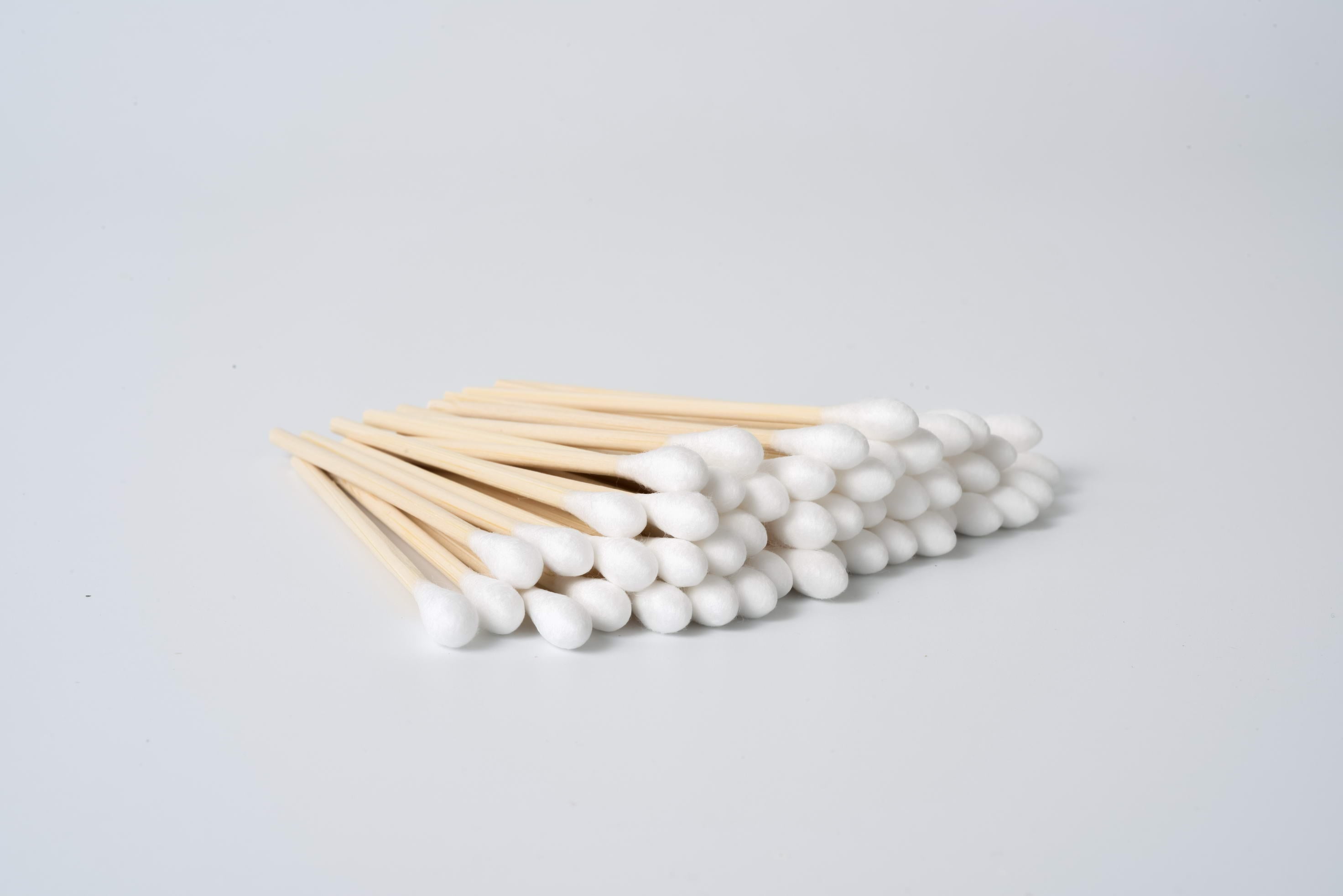
Tibbiy paxta uchli applikatorlar uchun tutqich materiali yetarli mustahkamlik va qattiqlikni ta'minlashi kerak, shu bilan birga tibbiy maqsadlar uchun xavfsiz bo'lishi kerak. Yuqori sifatli applikatorlarda odatda biyotegishuvchanlik va kimyoviy xavfsizlik uchun sinovdan o'tkazilgan tibbiy darajadagi yog'och, plastik yoki qog'oz materiallardan tayyorlangan tutqichlar mavjud. Yog'och tutqichlar barqaror o'rmonlardan olinishi va foydalanish davomida cho'zilish yoki sindirishdan himoya qilinishi uchun ishlanishi kerak.
Tutqich o'lchamlari belgilangan to'g'riliklarga mos kelishi kerak, shunda u tibbiyotdagi protseduralar bilan barqaror ishlash va mos kelishini ta'minlaydi. Uzunlik xususiyatlari odatda mo'ljallangan dasturga qarab 75 mm dan 152 mm gacha bo'ladi, diametr o'lchovlari esa qat'iy to'g'rilik doirasida saqlanadi. Sirtning silliq va yaxshi so'rilganligi tushkunliklarni oldini oladi hamda tibbiyot xodimlari uchun qulay boshqarishni ta'minlaydi.
Ishlash xususiyatlari va sinov protokollari
Suyuqlikni so'rash va ushlab turish xususiyatlari
Yuqori sifatli tibbiy paxta boshi bilan uskunalar so'rilib olingan suyuqlikni zarur bo'lganda chiqarish qobiliyatini saqlab, ajoyib so'rash imkoniyatiga ega bo'lishi kerak. Standartlashtirilgan sinov protokollari nazorat ostidagi sharoitlarda so'rash tezligi, umumiy so'rash hajmi hamda suyuqlikni ushlab turish xususiyatlarini o'lchaydi. Bu sinovlar namunalarni samarali to'plash, dorilarni qo'llash yoki yaralarni tozalashda ortiqcha suyuqlikni ushlab qolmaslik orqali ularning samaradorligini buzmasdan amalga oshirilishini kafolatlaydi.
Paxta uchi mos keladigan siqilishdan tiklanish xususiyatiga ega bo'lishi kerak, ya'ni foydalanish jarayonida siqilgandan keyin dastlabki shakliga va hajmiga qaytishi kerak. Bu xususiyat protsedura davomida barqaror ishlashini ta'minlaydi va applikatorning doimiy ravishda deformatsiyalanishiga to'sqinlik qiladi. Sinov protokollari turli qo'llanilgan kuchlar va atrof-muhit sharoitida siqilishga qarshilik va tiklanish tezligini baholaydi.
Uch qoplamasining yopishqoqligi va butunligi standartlari
Paxta uchi bilan tayoqcha o'rtasidagi biriktirish mexanizmi tibbiy paxta applikatorlari uchun muhim sifat omilidir. Yuqori sifatli mahsulotlar paxta uchini tayoqchadan ajratish uchun zarur bo'lgan kuchni o'lchaydigan qattiq tortish sinovlaridan o'tishi kerak. Oddiy holatda applikatorning o'lchami va mo'ljallangan foydalanishiga qarab minimal tortish kuchi 2,0 dan 4,0 funtgacha bo'ladi, bu normal tibbiy protseduralar davomida uchlarning mustahkam birikkan holda qolishini ta'minlaydi.
Uch qismi integral tuzilmasini sinovdan o'tkazish normal foydalanish sharoitida paxta uchining tolalarini so'chilish, yirtilish va tuzilmaning buzilishiga qarshilik darajasini baholaydi. Ushbu sinovlar namuna olish, dorilarni qo'llash kabi turli tibbiyot sohasidagi dasturlarni simulyatsiya qiladi va paxta uchining jarayon davomida shaklini saqlab, samaradorligini oshirishni ta'minlaydi. Sifat standartlari tola chiqishining va tuzilmaviy deformatsiyaning qabul qilinishi mumkin bo'lgan maksimal darajasini belgilaydi.
Ishlab chiqarish jarayonini boshqarish va sifatni ta'minlash
Ishlab chiqarish muhitining standartlari
Tibbiy paxta bilan to'ldirilgan aplikatorlar uchun ishlab chiqarish korxonalari tibbiy asboblar ishlab chiqarish uchun mo'ljallangan toza xona standartlariga javob beradigan nazorat ostidagi muhitni saqlab turishlari kerak. Havo filtrlash tizimlari, harorat va namlikni boshqarish hamda xodimlarning gigiena qoidalari ishlab chiqarish jarayonining barcha bosqichlarida ifloslanish xavfini minimal darajada saqlashga yordam beradi. Atrof-muhitni nazorat qilish dasturlari zarrachalar miqdori, mikrobiologik ifloslanish va boshqa muhim parametrlarni uzluksiz kuzatib boradi.
Sifatni boshqarish tizimlari yakuniy mahsulotni paketlashgacha bo'lgan barcha xom ashyolarni kuzatib boruvchi to'liq hujjatlashtirish protseduralarini o'z ichiga olishi kerak. Partiyalar bo'yicha kuzatish tizimlari to'liq kuzatilish imkonini beradi hamda sifat muammolari yoki mahsulotlarni ortga qaytarish sodir bo'lganda tezkor chora ko'rinishiga yordam beradi. Statistik jarayonni boshqarish usullari muhim ishlab chiqarish parametrlarini kuzatib, barqaror mahsulot sifatini ta'minlaydi hamda jarayondagi o'zgarishlarni erta aniqlash imkonini beradi.
Sinov va tasdiqlash protseduralari
Keng qamrovli sinov protokollari tibbiyotda ishlatiladigan paxta bilan tugallangan applikatorlarning sifat me'yori talablari bilan mos kelishini ta'minlash uchun keluvchi xom ashyo hamda tayyor mahsulotlarni baholashni o'z ichiga oladi. Xom ashyoni sinovga tekshirish tolalar sifatini baholash, kimyoviy tozalikni tahlil qilish va biotegishuvchanligini tekshirishni o'z ichiga oladi. Qo'lliq materiallari ishlab chiqarishda foydalanishdan oldin mustahkamlik, o'lchamlar tekshiruvi hamda sirt sifatini baholashdan o'tkaziladi.
Tayyor mahsulotni sinovga tekshirish sterillikni tasdiqlash, o'lchovlarni aniqlash, ishlash xususiyatlarini baholash hamda paketlashning butunligini baholashni o'z ichiga oladi. Statistik namuna olish rejasi yetarli sinov qamrovini ta'minlaydi hamda ishlab chiqarish samaradorligini saqlab turadi. Uzoq muddatli barqarorlik tadqiqotlari turli saqlash sharoitlarida mahsulot ishlashini baholaydi hamda har xil paketlov konfiguratsiyalari uchun mos yaroqlilik muddatini belgilaydi.
Paketlash va saqlash talablari
Steril paketlash standartlari
Tibbiyotda ishlatiladigan paxta bilan qoplangan applikatorlarni steril holda saqlash hamda tibbiyot xodimlari uchun osonlik bilan ochish imkonini beradigan maxsus ambalaj talab qilinadi. Ambalaj materiallari sterilizatsiya jarayonlariga mos kelishini tasdiqlash kerak hamda mikroorganizmlar, namlik va boshqa atrof-muhit omillariga nisbatan to'g'ri to'siq xususiyatlarini ko'rsatishi kerak. Peel-paketlar, termoformlangan lotalar va boshqa steril ambalaj shakllari germetiklik standartlariga hamda steril holatni saqlash talablari bilan mos kelishi kerak.
Ambalaj yorlig'i tibbiyot asboblari qoidalariga rioya etishi kerak hamda steril indikatorlari, partiyalar, muddati tugash sanasi va foydalanish bo'yicha ko'rsatmalar kabi muhim ma'lumotlarni o'z ichiga olishi kerak. Ambalajdagi tarkibning aniq belgilanishi hamda alohida saqlash talablari tibbiyot xodimlari tomonidan mahsulotni to'g'ri tanlash va foydalanishni ta'minlaydi. Ambalaj dizayni aseptik ochishni qulaylashtirishi hamda mahsulotdan foydalanish paytida ifloslanish xavfini kamaytirishi kerak.
Saqlash va yaroqlilik muddati masalalari
Sifat standartlari tibbiy paxta applikatorlarini saqlash uchun mos harorat oralig'i, namlik chegaralari va to'g'ridan-to'g'ri quyosh nurlaridan himoya kabi shartlarni belgilaydi. Mahsulot qadoqlash materiallarining sifatini yo'qotishiga va mahsulot butunjiligini saqlashga to'sqinlik qilmasligi uchun saqlash joylari toza, quruq va yaxshi havzalanadigan bo'lishi kerak. Inventar aylanishi protseduralari mahsulotlarning belgilangan yaroqlilik muddati ichida foydalanilishini ta'minlaydi.
Yaroqlilik muddatini aniqlash turli atrof-muhit sharoitida tezlashtirilgan yoshlanish o'rganishlari va haqiqiy vaqt mobaynida barqarorlik sinovlarini o'z ichiga oladi. Bu o'rganishlar steril, mexanik xususiyatlarning va umumiy mahsulot samaradorligining vaqt o'tishi bilan o'zgarishini baholaydi. O'rnatilgan yaroqlilik muddati odatda qadoqlash konfiguratsiyasi va saqlash sharoitiga qaramay 3 dan 5 yilgacha bo'ladi, bu esa sog'liqni saqlash muassasalariga yetarli inventar boshqaruv imkoniyatini beradi.
Tez-tez so'raladigan savollar
Yuqori sifatli tibbiy paxta applikatorlarida qanday sertifikatlar bo'lishi kerak?
Sifatni boshqarish tizimlari uchun ISO 13485 sertifikati, me'yoriy talablarga rioya etish uchun FDA 510(k) ruxsati yoki CE belgilash hamda sterilizatsiyani tasdiqlash uchun ISO 11137 sertifikati bo'lishi kerak. Shuningdek, ishlab chiqaruvchilar ISO 10993 ga muvofiq biokompatibilite standartlariga mos kelishini va qabul qilish me'yoriy talablariga javob beradigan toza xolat tekshiruv natijalarini ko'rsatuvchi tahlil sertifikatlarini taqdim etishi kerak.
Tibbiy paxta applikatorlarining sifatini sog'liqni saqlash muassasalari qanday tekshirishi mumkin?
Sog'liqni saqlash muassasalari sifatni yetkazib beruvchilarning sertifikatlari va sifat hujjatlarni ko'rib chiqish, o'lchov aniqlik va tashqi ko'rinishni baholash maqsadida kelayotgan mahsulotlarni tekshirish protseduralarini o'tkazish hamda uchki yopishish mustahkamligi va toza xolat kabi asosiy xususiyatlar uchun muddati bilan o'tkaziladigan sinov dasturlarini joriy etish orqali tekshirishi mumkin. Yetkazib beruvchilarni malakaviyligini tasdiqlash dasturlarini joriy etish hamda sertifikatlangan manbalardan olinadigan mahsulotlarning barqaror sifatini ta'minlash uchun yetkazib beruvchilarning reyting kartochkalari bilan ishlash yordam beradi.
Tibbiy maqsadlar uchun ishlatiladigan paxta bilan tugallangan applikatorlar va umumiy maqsadlardagi applikatorlar o'rtasidagi asosiy farqlar qanday?
Tibbiy maqsadlar uchun ishlatiladigan paxta bilan tugallangan applikatorlar steril ishlab chiqarish jarayonlaridan o'tadi, biyyalanguvchanlik talablariga javob beradigan tibbiy maqsadli materiallardan foydalanadi hamda FDA hamda ISO talablarini o'z ichiga olgan qat'iy me'yoriy standartlarga rioya qiladi. Ular mustahkamroq uch qismi birikmasi, aniq o'lchovli to'g'riligi va steril holatni saqlash uchun tekshirilgan ambalaj tizimlari kabi yuqori sifatli tuzilishga ega. Umumiy maqsadlar uchun mo'ljallangan applikatorlarda bunday tibbiy uskunalar standartlari mavjud emas va ular klinik maqsadlarda foydalanish uchun mos emas.
Tibbiy paxta applikatorlarni sifatini saqlash uchun qanday saqlash kerak?
Tibbiy paxta bilan qoplangan applikatorlarni 15-30°C haroratda va nisbiy namligi 70% dan kam bo'lgan tozalik, quruq muhitda, asl steril ambalajida saqlash kerak. Saqlash joylari to'g'ridan-to'g'ri quyosh nurlaridan, ekstremal haroratlardan va potentsial ifloslanish manbalaridan himoyalangan bo'lishi kerak. Mahsulotlarni o'rnatilgan yaroqlilik muddati ichida ishlatish uchun navbatdagi kirim-evakuatsiya tamoyilini qo'llash orqali to'g'ri inventarizatsiya aylanmasi ta'minlanadi va sterillik buzilishini oldini olish uchun shikastlangan ambalaj inventarizatsiyadan chiqarilishi kerak.

