 EN
EN


How to ensure cotton pads are soft, strong, and chemical-free?
Ensuring that makeup removal cotton pads meet the standards of softness, strength, and chemical-free composition is essential for both consumer safety and product performance. Whether you are a manufacturer, distributor, or brand owner sourcing these products, understanding the production controls, material selection criteria, and quality verification methods directly impacts the final product's market acceptance and regulatory compliance. This comprehensive guide explores the critical process steps, material science principles, and quality assurance protocols required to produce makeup removal cotton pads that deliver gentle skin contact, durability during use, and complete absence of harmful chemical residues.
The cosmetic and personal care industry increasingly demands transparency in raw material sourcing and manufacturing processes, particularly for products in direct prolonged contact with facial skin. Achieving the ideal balance between softness, tensile strength, and chemical purity requires integrated control across fiber selection, processing methods, bonding techniques, and post-production testing. This article details the specific mechanisms, decision criteria, and implementation strategies that enable manufacturers to consistently deliver makeup removal cotton pads that satisfy both technical performance benchmarks and consumer health expectations, providing actionable insights for quality control managers, product development teams, and procurement professionals.
Understanding Material Selection for Optimal Softness and Purity
Cotton Fiber Grading and Its Impact on Softness
The foundation of producing soft makeup removal cotton pads begins with the selection of appropriate cotton fiber grades. Premium-grade cotton fibers, typically ranging from middling to good middling classifications according to USDA standards, possess longer staple lengths between 28 to 34 millimeters and finer micronaire values between 3.5 to 4.9. These characteristics directly translate to superior softness because longer fibers create smoother yarn surfaces with fewer protruding fiber ends that might cause skin irritation. When manufacturers source cotton specifically for makeup removal cotton pads intended for facial use, prioritizing high-grade staple cotton ensures the finished product maintains a gentle tactile quality that consumers associate with premium skincare accessories.
The relationship between fiber fineness and perceived softness operates through reduced friction coefficients at the microscopic level. Cotton fibers with smaller cross-sectional diameters create denser, more uniform fabric structures that distribute pressure more evenly across the skin surface during makeup removal actions. This physical property becomes particularly important when makeup removal cotton pads undergo repeated wiping motions, as coarser fibers with irregular surfaces can create micro-abrasions on sensitive facial skin. Quality-focused manufacturers implement fiber testing protocols using High Volume Instrument systems to measure micronaire, strength, and length uniformity before accepting cotton bales into production, ensuring consistency in the softness characteristics of the final makeup removal cotton pads.
Chemical-Free Processing Requirements for Raw Cotton
Achieving truly chemical-free makeup removal cotton pads necessitates strict control over the cotton processing pathway from ginning through bleaching and finishing. Conventional cotton processing often involves synthetic pesticides during cultivation, chemical defoliants before harvesting, and chlorine-based bleaching agents during whitening stages. To eliminate these chemical residues, manufacturers committed to producing chemical-free products must source certified organic cotton that adheres to standards such as GOTS (Global Organic Textile Standard) or OEKO-TEX Standard 100, which prohibit the use of harmful substances throughout the entire supply chain. This certification approach ensures that makeup removal cotton pads contain no residual pesticides, heavy metals, formaldehyde, or aromatic amines that could trigger allergic reactions or long-term health concerns.
The bleaching process represents a critical control point where chemical contamination risks are highest. Traditional chlorine bleaching leaves residual organochlorine compounds and generates toxic byproducts such as dioxins, which can persist in finished makeup removal cotton pads even after washing stages. Alternative oxygen-based bleaching methods using hydrogen peroxide under controlled pH and temperature conditions achieve comparable whiteness levels without introducing halogenated organic compounds. Manufacturers should implement closed-loop bleaching systems with multiple rinse cycles and residual peroxide decomposition steps to ensure that the final makeup removal cotton pads contain no detectable chemical agents. Laboratory testing using gas chromatography-mass spectrometry can verify the absence of volatile organic compounds and confirm compliance with international safety standards for products intended for facial skin contact.
Natural Binding Alternatives for Chemical-Free Manufacturing
Many conventional makeup removal cotton pads rely on synthetic latex binders, polyester adhesives, or resin treatments to maintain structural integrity during use. These binding agents introduce potential allergens and chemical residues that contradict chemical-free product claims. To manufacture truly chemical-free makeup removal cotton pads, producers must adopt natural bonding techniques such as mechanical entanglement through needle-punching, thermal bonding using cotton's natural cellulosic properties, or minimal use of food-grade starch-based binders derived from corn or potato sources. Needle-punching technology creates physical interlocking between cotton fibers through repeated barbed needle penetration, forming cohesive nonwoven structures without any chemical additives.
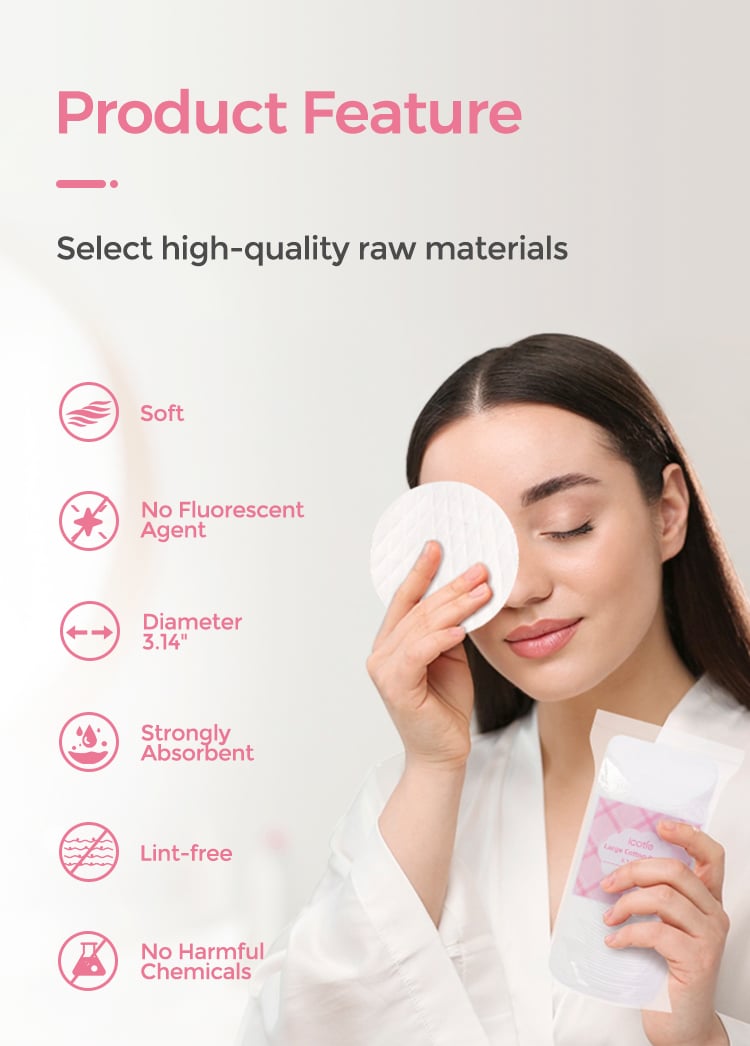
Thermal bonding methods exploit the thermoplastic behavior of cotton cellulose when exposed to controlled heat and moisture conditions. By briefly subjecting cotton fiber webs to temperatures between 180 to 200 degrees Celsius under pressure, manufacturers can induce partial fiber fusion at contact points, creating stable makeup removal cotton pads without synthetic binders. This process requires precise control over temperature distribution, dwell time, and cooling rates to prevent fiber degradation while achieving adequate bond strength. When implemented correctly, thermally bonded makeup removal cotton pads exhibit excellent dry and wet strength characteristics while maintaining complete chemical-free status, appealing to health-conscious consumers and meeting stringent regulatory requirements for cosmetic accessory products in markets such as the European Union and Japan.
Implementing Production Controls for Strength and Durability
Fiber Orientation and Layering Strategies
The structural strength of makeup removal cotton pads depends significantly on how cotton fibers are oriented and layered during the web formation stage. Cross-laying techniques, where successive fiber webs are deposited at alternating angles, create multidirectional fiber networks that resist tearing in all directions during use. This approach proves particularly effective for makeup removal cotton pads that must withstand both lateral wiping forces and vertical compression when users apply cleansing solutions. Manufacturers typically employ carding machines with cross-lapper attachments that automatically rotate the fiber web orientation between 45 and 90 degrees relative to the machine direction, producing balanced strength characteristics.
Optimal layering density for makeup removal cotton pads requires balancing strength requirements against softness and absorbency objectives. Higher fiber densities naturally increase tensile strength and resistance to linting, but excessive compression reduces void spaces needed for liquid absorption and creates stiffer textures that feel less comfortable on facial skin. Industry best practices suggest targeting basis weights between 40 to 60 grams per square meter for facial makeup removal cotton pads, with three to five distinct cross-laid layers providing adequate structural integrity without compromising tactile quality. Quality control protocols should include regular testing of both machine-direction and cross-direction tensile strength using standardized methods such as ASTM D5034 to verify that production parameters consistently deliver the intended strength profile across different production batches.
Needle Punching Depth and Density Optimization
For makeup removal cotton pads manufactured using mechanical bonding methods, the needle punching parameters directly determine the final product's strength characteristics. Needle penetration depth, punch density measured in punches per square centimeter, and needle barb configuration collectively influence how effectively fibers become entangled and locked into stable structures. Deeper needle penetration, typically ranging from 8 to 12 millimeters for cotton pad applications, creates more extensive fiber entanglement through the entire thickness of the material, resulting in superior wet strength that prevents the makeup removal cotton pads from disintegrating when saturated with cleansers or toners.
Punch density optimization involves finding the threshold where additional needle penetrations provide diminishing strength returns while increasingly disrupting fiber continuity and creating potential weak points. For premium makeup removal cotton pads, manufacturers typically operate within a range of 80 to 150 punches per square centimeter, with higher densities reserved for products marketed as extra-durable or lint-free variants. The needle barb geometry also plays a crucial role, as barbs with shallower angles and finer points cause less fiber damage during penetration while still achieving effective entanglement. Production engineers should conduct systematic trials varying punch density and needle configurations while measuring resulting tensile strength, abrasion resistance, and surface smoothness to establish optimal settings that deliver strong yet soft makeup removal cotton pads meeting specific product positioning requirements.
Edge Treatment Techniques for Lint Prevention
Lint generation during use represents a common quality complaint for makeup removal cotton pads, occurring when loose fibers detach from cut edges or inadequately bonded surfaces. Preventing this issue requires specialized edge treatment processes that seal fiber ends without creating harsh, scratchy borders that irritate skin. Thermal edge sealing using heated ultrasonic cutting blades simultaneously cuts and fuses cotton fibers at pad perimeters, creating smooth, sealed edges that resist fraying. This technology works particularly well when combined with cross-laid fiber structures, as the multidirectional orientation ensures that some fibers run parallel to each edge, providing continuous pathways for thermal fusion.
Alternative edge reinforcement approaches include increased needle punching density along pad perimeters or application of narrow binding strips using the same cotton material. For makeup removal cotton pads targeting ultra-sensitive skin users, manufacturers may implement laser cutting systems that precisely ablate fibers along cutting lines with minimal thermal impact, producing clean edges without the harder texture associated with ultrasonic sealing. Quality verification for lint resistance should include standardized testing protocols such as measuring fiber release during simulated use conditions, where makeup removal cotton pads are subjected to repeated rubbing against textured surfaces while monitoring the quantity of detached fibers. Establishing maximum acceptable lint generation thresholds, typically below 5 milligrams per 100 rubbing cycles for premium facial products, ensures consistent performance that maintains consumer trust and reduces complaint rates.
Establishing Chemical Testing and Verification Protocols
Residual Chemical Detection Methods
Verifying the chemical-free status of makeup removal cotton pads requires comprehensive analytical testing protocols that detect trace contaminants at parts-per-million or parts-per-billion concentrations. Gas chromatography coupled with mass spectrometry provides the gold standard for identifying volatile organic compounds, pesticide residues, and industrial processing chemicals that might remain in finished products. This analytical technique separates complex mixtures into individual components based on volatility and molecular weight, then identifies each component by its unique mass spectrum fingerprint. For makeup removal cotton pads claiming chemical-free composition, testing protocols should screen for at least 200 common pesticides, 50 industrial solvents, and regulated substances specified in frameworks such as REACH (Registration, Evaluation, Authorization and Restriction of Chemicals) and California Proposition 65.
Heavy metal testing represents another critical verification component, as cotton cultivation in contaminated soils or processing with impure water sources can introduce cadmium, lead, mercury, and arsenic into makeup removal cotton pads. Inductively coupled plasma mass spectrometry enables detection of these elements at concentrations well below regulatory limits, typically measuring in parts per billion ranges. Manufacturers should establish internal specifications more stringent than legal requirements, targeting heavy metal concentrations below 0.1 parts per million for lead and cadmium, and below 0.01 parts per million for mercury and arsenic. These conservative limits provide safety margins that accommodate analytical variation and demonstrate commitment to product purity beyond minimum compliance, strengthening brand positioning for makeup removal cotton pads marketed to health-conscious consumers.
pH Balance and Skin Compatibility Testing
The pH value of makeup removal cotton pads influences their compatibility with facial skin's natural acid mantle, which typically maintains a pH between 4.5 and 5.5. Cotton processing methods, particularly bleaching and washing stages, can leave alkaline residues that disrupt this protective barrier when products contact skin. Quality control protocols should include pH measurement of water extracts from makeup removal cotton pads using calibrated pH meters, targeting neutral to slightly acidic values between 6.0 and 7.5 to minimize skin disruption risk. Manufacturers can adjust final washing cycles with controlled additions of food-grade citric acid or acetic acid to neutralize any residual alkalinity, followed by thorough rinsing to remove excess acidifying agents.
Dermatological compatibility testing provides additional assurance that makeup removal cotton pads will not cause adverse skin reactions in typical use scenarios. Patch testing protocols, conducted according to standards such as HRIPT (Human Repeat Insult Patch Test), involve applying cotton pad samples to volunteer subjects' skin for repeated exposure periods, then monitoring for erythema, edema, or allergic responses. For products marketed as suitable for sensitive skin, manufacturers should conduct these studies with volunteers specifically recruited for skin sensitivity histories, providing evidence that even predisposed individuals tolerate the makeup removal cotton pads without reactions. Obtaining dermatologist testing certifications and including these endorsements on product packaging strengthens consumer confidence in chemical-free and safety claims, differentiating products in competitive cosmetic accessory markets.
Certificate Compliance and Third-Party Verification
Third-party certification programs provide independent verification that makeup removal cotton pads meet defined chemical-free and safety standards. OEKO-TEX Standard 100 certification specifically addresses textile products in skin contact, testing for over 100 regulated and non-regulated harmful substances including pesticides, heavy metals, formaldehyde, and phthalates. Products passing this certification display recognizable labels that communicate safety credentials to consumers without requiring detailed technical explanations. Similarly, GOTS certification verifies both organic fiber content and processing methods throughout the supply chain, ensuring makeup removal cotton pads contain at least 95 percent certified organic cotton and prohibiting use of toxic chemicals in manufacturing.
Manufacturers should view certification not merely as marketing tools but as frameworks for continuous quality improvement and risk management. The audit requirements and periodic retesting mandated by these programs create systematic quality assurance structures that catch process deviations before they affect large production volumes. For makeup removal cotton pads exported to multiple international markets, obtaining regionally recognized certifications such as Japan's Organic Cotton Association standards or Korea's KC Mark for cosmetic accessories facilitates regulatory approval and consumer acceptance. The investment in certification fees, testing costs, and compliance infrastructure typically generates positive returns through premium pricing opportunities, reduced quality incidents, and enhanced brand reputation in increasingly quality-conscious personal care markets.
Optimizing Manufacturing Environment and Handling Practices
Clean Room Standards for Contamination Prevention
Maintaining chemical-free status for makeup removal cotton pads requires controlling the manufacturing environment to prevent post-production contamination from airborne particles, volatile organic compounds, or cross-contamination from adjacent processes. While full pharmaceutical-grade clean rooms may exceed economic feasibility for cotton pad production, implementing controlled environment principles significantly reduces contamination risks. Production areas should maintain positive air pressure with filtered air supplies achieving at minimum ISO Class 8 cleanliness standards, equivalent to fewer than 3,520,000 particles larger than 0.5 microns per cubic meter. This air quality level prevents industrial dust, textile fibers from other processes, and microbial contaminants from settling on makeup removal cotton pads during manufacturing and packaging stages.
Temperature and humidity control within production environments affects both product quality and chemical stability. Maintaining relative humidity between 50 and 60 percent prevents excessive static electricity buildup that attracts airborne particles to makeup removal cotton pads, while also preserving cotton's natural moisture content that contributes to softness. Temperature control between 20 and 25 degrees Celsius ensures consistent processing conditions and prevents condensation that could promote microbial growth on finished products. Manufacturers should implement environmental monitoring systems with continuous data logging, establishing alert thresholds that trigger corrective actions when conditions drift outside specified ranges. This proactive approach prevents quality deviations and provides documented evidence of controlled conditions supporting chemical-free claims for makeup removal cotton pads sold in regulated markets.
Personnel Hygiene and Material Handling Protocols
Human operators represent potential contamination vectors through skin oils, cosmetic residues, perfumes, and external contaminants transferred on clothing or hands. Comprehensive personnel protocols for makeup removal cotton pads manufacturing should mandate clean room garments including hairnets, face masks, and dedicated footwear that never leave the production area. Hand washing protocols using unscented, residue-free soaps followed by alcohol-based sanitizers eliminate biological contaminants and reduce chemical transfer risks. For production lines handling chemical-free makeup removal cotton pads specifically, manufacturers should prohibit operators from using personal care products containing strong fragrances, lotions, or other substances that might transfer during product handling.
Material handling equipment and contact surfaces require regular cleaning with validated methods that effectively remove contaminants without introducing new chemical residues. Cleaning protocols should specify use of hot water, steam, or approved food-grade cleaning agents followed by thorough rinsing and verification testing. Stainless steel construction for conveyors, cutting tables, and packaging equipment minimizes chemical leaching and facilitates effective cleaning compared to painted or plastic surfaces that might harbor residues. Establishing material flow patterns that physically separate incoming raw cotton, in-process materials, and finished makeup removal cotton pads prevents cross-contamination and allows targeted cleaning intensity appropriate for each zone's contamination risk level.
Packaging Material Selection and Sealing Integrity
The packaging system for makeup removal cotton pads serves as the final barrier protecting chemical-free status between manufacturing and end use. Primary packaging materials must themselves meet chemical safety standards, avoiding plasticizers, printing inks with heavy metals, or adhesives that might migrate into the cotton pads during storage. Food-grade polyethylene or polypropylene films provide inert barriers with minimal migration potential, while paper-based packaging options appeal to sustainability-focused consumers if sourced from certified chemical-free paper manufacturing processes. Printing specifications should mandate use of water-based or UV-cured inks rather than solvent-based alternatives that release volatile organic compounds potentially absorbed by makeup removal cotton pads.
Sealing integrity testing ensures packaging maintains protective functions throughout distribution and storage periods. Heat sealing parameters including temperature, dwell time, and pressure must be optimized to create hermetic seals without generating excessive heat that might degrade cotton or packaging materials. Quality control protocols should include regular seal strength testing using tensile measurement devices, dye penetration testing to reveal microscopic channels, and leak detection using vacuum decay methods. For makeup removal cotton pads marketed with extended shelf life claims, accelerated aging studies conducted at elevated temperature and humidity conditions verify that packaging maintains protective functions and products retain chemical-free status throughout the declared shelf life period, typically 36 months for properly sealed cotton products.
FAQ
What certifications should I look for when sourcing chemical-free makeup removal cotton pads?
When sourcing chemical-free makeup removal cotton pads, prioritize suppliers holding OEKO-TEX Standard 100 certification, which verifies testing for over 100 harmful substances including pesticides, heavy metals, and formaldehyde. Global Organic Textile Standard (GOTS) certification provides additional assurance by certifying organic fiber content and prohibiting toxic chemicals throughout processing. Look for suppliers who can provide test reports from accredited laboratories confirming absence of restricted substances according to international regulations such as REACH, and consider requesting certificates specific to the makeup removal cotton pads production batch you are purchasing rather than general facility certifications. These documentation requirements ensure the products meet chemical-free standards consistently across all production runs.
How can I verify that makeup removal cotton pads maintain adequate strength for practical use?
Verifying strength requires requesting physical samples and conducting simple user simulation tests before committing to large orders. Saturate the makeup removal cotton pads with typical cleansing solutions or micellar water, then perform rubbing actions against textured surfaces to simulate makeup removal. Quality products should maintain structural integrity without tearing, excessive linting, or disintegration during at least 30 seconds of moderate-pressure rubbing. For more rigorous verification, request tensile strength testing data according to ASTM D5034 standards, with minimum acceptable values around 8 to 12 Newtons in both machine and cross directions for facial makeup removal cotton pads. Additionally, ask suppliers about their needle punching density specifications and fiber layering techniques, as these manufacturing parameters directly correlate with finished product strength characteristics.
What makes makeup removal cotton pads feel soft versus rough on facial skin?
Softness perception depends primarily on cotton fiber quality, particularly staple length and fineness measured by micronaire values. Premium makeup removal cotton pads use longer staple cotton (28 to 34 millimeters) with finer fibers (micronaire 3.5 to 4.9), creating smoother surfaces with fewer protruding fiber ends that might cause irritation. The manufacturing process also significantly impacts softness, with excessive needle punching density or harsh chemical treatments degrading tactile quality. Thermal bonding or minimal mechanical bonding preserves natural fiber softness better than heavy resin treatments or synthetic binders. When evaluating samples, rub the makeup removal cotton pads between fingers and against your cheek area to assess surface smoothness, and examine edges for harsh sealing that might scratch skin. Products combining high-grade cotton with optimized bonding techniques deliver superior softness while maintaining necessary strength for effective makeup removal.
How long do chemical-free makeup removal cotton pads maintain their quality during storage?
Chemical-free makeup removal cotton pads typically maintain quality for 36 months when stored in sealed, moisture-proof packaging away from direct sunlight and temperature extremes. Cotton's natural cellulose structure remains stable under proper storage conditions, and absence of chemical additives actually enhances long-term stability by eliminating degradation pathways associated with synthetic binders or treatments. However, exposure to high humidity above 70 percent or temperature fluctuations can promote microbial growth or moisture absorption that affects texture and performance. Always verify that suppliers provide hermetically sealed packaging with moisture barrier properties, and check for manufacturing date codes allowing first-in-first-out inventory rotation. For wholesale purchases, consider storage conditions in your facility and implement climate control if necessary to preserve the quality characteristics that define premium chemical-free makeup removal cotton pads throughout their intended shelf life.

