 EN
EN


How to identify premium sealed edge pads for cosmetic packaging?
When sourcing materials for cosmetic packaging, the quality of sealed edge cotton pads can make or break a product line. Premium sealed edge cotton pads are not simply a commodity item — they represent a critical touchpoint between a brand and its end consumer. Whether you are a cosmetic formulator, a private label brand owner, or a packaging procurement specialist, understanding how to distinguish genuinely high-quality sealed edge cotton pads from inferior alternatives is an essential skill that directly affects product performance, customer satisfaction, and brand reputation.
The market for sealed edge cotton pads is broad and varied, with significant differences in raw material quality, manufacturing precision, and edge-sealing technology. Not all pads marketed as premium actually meet the standards that cosmetic packaging demands. This guide walks through the specific identification criteria — from physical construction to material purity — that separate genuinely premium sealed edge cotton pads from those that fall short. By the end, you will have a clear, practical framework for evaluating any pad before it enters your supply chain.
Understanding What Makes Sealed Edge Construction Premium
The Role of Edge Sealing in Pad Performance
The defining feature of sealed edge cotton pads is, of course, the sealed perimeter. This edge treatment is not merely cosmetic — it serves a functional purpose that directly impacts how the pad performs during use. A properly sealed edge prevents fiber shedding, which is one of the most common complaints consumers raise about lower-quality cotton pads. When fibers detach during makeup removal or skincare application, they can irritate the skin, clog pores, or leave residue on the face.
Premium sealed edge cotton pads use a bonding or heat-sealing process that fuses the perimeter fibers without introducing harsh adhesives or synthetic binders that could compromise skin safety. The seal should be firm and consistent all the way around the pad, with no gaps, fraying, or uneven compression. When you run a finger along the edge of a high-quality pad, the transition from the soft body to the sealed border should feel smooth and uniform, not rough or brittle.
Inferior pads often simulate a sealed edge through simple stitching or a thin adhesive strip, neither of which provides the same level of fiber containment. These alternatives tend to degrade quickly when saturated with toner, micellar water, or other liquid cosmetic products, leading to edge breakdown mid-use. For cosmetic packaging purposes, this kind of failure is unacceptable and reflects poorly on the brand.
Evaluating Edge Consistency and Symmetry
Visual inspection is one of the first and most reliable tools for identifying premium sealed edge cotton pads. Hold the pad up to a light source and examine the edge from multiple angles. The sealed border should be even in width all the way around — typically between two and four millimeters — with no sections that appear thinner, wider, or inconsistently compressed. Asymmetry in the seal is a strong indicator of inconsistent manufacturing processes.
Premium sealed edge cotton pads also maintain their shape under pressure. Press the pad gently between your fingers and release it. A high-quality pad will spring back to its original form without permanent deformation. The sealed edge should remain intact and not separate from the body of the pad. This resilience is a sign of well-integrated fiber bonding rather than a superficial surface treatment.
Color uniformity along the sealed edge is another subtle but telling indicator. Discoloration, yellowing, or dark spots along the perimeter can suggest the use of low-grade cotton, chemical residues from processing, or inadequate quality control during sealing. For cosmetic packaging, where visual presentation is part of the product experience, these imperfections are not acceptable in a premium product.
Raw Material Quality as a Foundation for Premium Pads
Identifying Pure Cotton Versus Blended Fiber Pads
The material composition of sealed edge cotton pads is arguably the most important quality factor, yet it is also the most frequently misrepresented. Many pads on the market are blended with synthetic fibers such as polyester or viscose to reduce manufacturing costs. While these blends can mimic the appearance of pure cotton, they behave very differently on the skin and under cosmetic product saturation.
Pure cotton sealed edge cotton pads absorb liquid more evenly and release it more gently onto the skin. They are naturally hypoallergenic and less likely to cause irritation, which is a critical consideration for cosmetic packaging targeting sensitive skin consumers. Blended pads, by contrast, tend to absorb unevenly, leaving patches of product on the skin rather than distributing it uniformly.
A simple burn test can help distinguish pure cotton from synthetic blends in a laboratory or quality control setting. Pure cotton burns cleanly and leaves a fine ash, while synthetic fibers melt, bead, or produce a chemical smell. For procurement purposes, requesting a material composition certificate from the supplier is the most reliable method of verification. Reputable manufacturers of premium sealed edge cotton pads will readily provide this documentation.
Assessing Fiber Grade and Processing Standards
Not all cotton is equal. The grade of cotton used in sealed edge cotton pads affects softness, absorbency, and skin compatibility. Premium pads are typically made from combed or carded cotton that has been processed to remove short fibers, impurities, and natural waxes. This processing results in a softer, more uniform fiber structure that performs consistently across the surface of the pad.
Fluorescent brightening agents are a common concern in cotton pad manufacturing. Some lower-grade sealed edge cotton pads are treated with optical brighteners to achieve a whiter appearance, which can be misleading to buyers. These agents are not skin-safe and have no place in cosmetic packaging. A UV light test can reveal the presence of fluorescent agents — premium pads will not glow under UV exposure, while treated pads will emit a bright blue-white fluorescence.
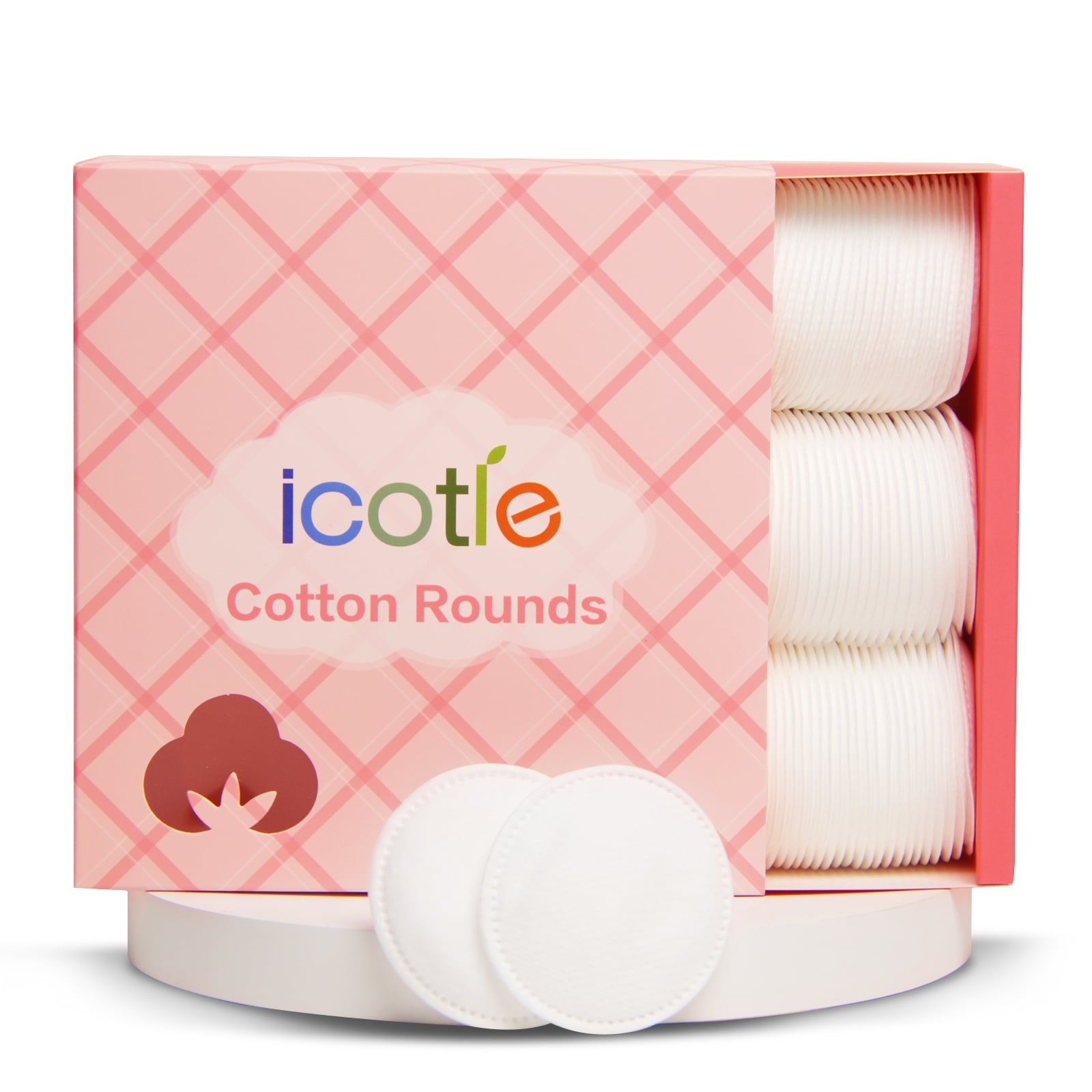
Chlorine bleaching is another processing variable that separates premium from standard sealed edge cotton pads. Chlorine-bleached cotton can leave chemical residues that irritate sensitive skin. Premium manufacturers use oxygen or hydrogen peroxide bleaching processes that achieve whiteness without harmful residues. When evaluating suppliers, ask specifically about their bleaching process and request safety data sheets if the pads will be used in direct skin contact applications.
Structural Integrity and Absorbency Performance
Testing Absorbency Rate and Liquid Distribution
Absorbency is a core functional requirement for sealed edge cotton pads used in cosmetic packaging. A premium pad should absorb liquid quickly and distribute it evenly across its entire surface, including the areas closest to the sealed edge. This even distribution ensures that the full surface area of the pad is available for product application, maximizing efficiency and minimizing waste.
A practical field test involves placing a few drops of water or toner at the center of the pad and observing how the liquid spreads. In a premium sealed edge cotton pads product, the liquid should spread outward in a roughly circular pattern, reaching the edges within a few seconds. Uneven spreading, pooling at the center, or failure to reach the sealed edge area indicates poor fiber distribution or inconsistent density within the pad body.
Saturation capacity is equally important. Premium sealed edge cotton pads should be able to hold a significant volume of liquid without dripping or breaking apart. Squeeze a fully saturated pad gently — it should release liquid gradually and evenly rather than collapsing or tearing. Structural integrity under saturation is a direct reflection of the quality of both the cotton fiber and the sealing process.
Thickness, Density, and Layering Construction
The physical thickness and internal density of sealed edge cotton pads are important indicators of quality that are easy to assess during product evaluation. Premium pads have a consistent thickness across their entire surface, with no thin spots or areas of reduced density. Hold the pad up to a light source — the light transmission should be uniform, with no visible patches of varying density.
Many premium sealed edge cotton pads are constructed with multiple layers, each serving a specific function. A common configuration includes a soft outer layer for gentle skin contact, a dense absorbent core for liquid retention, and a smooth inner layer that prevents product from passing through the pad entirely. This layered construction is a hallmark of thoughtful product engineering and is difficult to replicate in low-cost manufacturing.
Delamination — the separation of layers during use — is a failure mode that disqualifies a pad from premium status. To test for this, saturate the pad and then gently attempt to separate the layers by peeling from the edge. In a well-constructed premium pad, the layers should resist separation and remain bonded throughout normal use conditions. Any pad that delaminates easily under this test is not suitable for cosmetic packaging applications.
Packaging Presentation and Compliance Standards
Reading Packaging Claims and Certifications
The outer packaging of sealed edge cotton pads provides important signals about product quality and supplier credibility. Premium products are typically accompanied by clear material composition disclosures, manufacturing origin information, and relevant certifications. Look for certifications such as OEKO-TEX Standard 100, which verifies that the product has been tested for harmful substances and is safe for skin contact. This certification is particularly relevant for cosmetic packaging applications.
ISO quality management certifications held by the manufacturer indicate that the production process follows documented and audited quality standards. While a certification alone does not guarantee product quality, its absence from a supplier claiming to offer premium sealed edge cotton pads should prompt additional scrutiny. Reputable manufacturers invest in third-party certification because it supports their market positioning and provides buyers with verifiable assurance.
Be cautious of vague or unverifiable claims on packaging, such as '100% natural' or 'dermatologist tested' without supporting documentation. Premium sealed edge cotton pads suppliers can back up their claims with test reports, material safety data sheets, and certification documents. If a supplier is unwilling or unable to provide this documentation upon request, that is a significant red flag regardless of how the product appears visually.
Evaluating Packaging Hygiene and Contamination Controls
For cosmetic packaging, the hygiene standards applied during the manufacturing and packaging of sealed edge cotton pads are non-negotiable. Premium pads are produced in controlled environments that minimize contamination risk, and they are packaged in sealed, tamper-evident formats that protect the product until the point of use. Inspect the packaging for any signs of moisture ingress, discoloration, or compromised seals before accepting a shipment.
Individual wrapping or resealable packaging formats are common in premium sealed edge cotton pads lines, particularly for retail cosmetic packaging. These formats not only protect the product but also communicate quality to the end consumer. Bulk packaging without adequate moisture barriers is more appropriate for industrial or professional use and may not meet the presentation standards expected in premium cosmetic retail contexts.
Traceability is another dimension of packaging quality that matters in B2B procurement. Premium manufacturers of sealed edge cotton pads maintain lot numbering systems and production records that allow buyers to trace any quality issue back to a specific production batch. This traceability is essential for cosmetic brands that need to manage product recalls or quality complaints efficiently.
FAQ
What is the most reliable way to test if sealed edge cotton pads are made from pure cotton?
The most reliable method in a procurement context is to request a material composition certificate and third-party test report from the supplier. In a hands-on evaluation, a burn test can provide a quick indication — pure cotton burns cleanly and leaves a soft ash, while synthetic blends melt or produce a chemical odor. A UV light test can also reveal the presence of fluorescent brightening agents, which are absent in premium sealed edge cotton pads made from properly processed cotton.
How do I distinguish a genuine heat-sealed edge from a stitched or adhesive edge?
A genuine heat-sealed or thermally bonded edge on sealed edge cotton pads feels smooth and slightly firm to the touch, with no visible thread, stitching lines, or adhesive residue. The transition from the pad body to the sealed border is gradual and integrated. Stitched edges show visible thread loops or puncture marks, while adhesive edges may feel slightly tacky or show a distinct line where the adhesive was applied. Saturating the pad and then examining the edge is a useful stress test — genuine sealed edges maintain their integrity when wet, while stitched or adhesive edges often begin to separate.
Are there specific certifications I should require when sourcing sealed edge cotton pads for cosmetic packaging?
For cosmetic packaging applications, OEKO-TEX Standard 100 certification is the most directly relevant, as it confirms the product has been tested for a comprehensive list of harmful substances. ISO 9001 certification from the manufacturer indicates a quality management system is in place. Depending on your target market, additional regulatory compliance documentation may be required — for example, compliance with EU cosmetic regulations or FDA guidelines for products sold in the United States. Always request documentation rather than accepting verbal assurances when evaluating sealed edge cotton pads suppliers.
Can the quality of sealed edge cotton pads affect the performance of the cosmetic products they are used with?
Yes, significantly. The absorbency rate, fiber purity, and surface texture of sealed edge cotton pads directly influence how cosmetic products are applied and absorbed by the skin. A pad with uneven absorbency can cause inconsistent product distribution, leading to patchy application. Fiber shedding from poorly sealed edges can introduce contaminants into the skincare routine. For toners, essences, and micellar waters in particular, the interaction between the pad and the liquid formula is critical — premium sealed edge cotton pads are engineered to work with these formulas in a way that maximizes efficacy and minimizes waste.

