 EN
EN


What standards define premium quality beauty cotton swabs?
When it comes to personal care and professional beauty routines, not all beauty cotton swabs are created equal. The difference between a swab that performs flawlessly and one that sheds fibers, bends under pressure, or irritates sensitive skin often comes down to a set of well-defined quality standards that separate premium products from commodity alternatives. Understanding what those standards are helps buyers, formulators, and procurement professionals make smarter sourcing decisions.
Premium beauty cotton swabs are evaluated across multiple dimensions — from the purity of the cotton fiber used to the structural integrity of the stick, the consistency of the tip shape, and the absence of harmful chemical residues. Each of these dimensions reflects a specific standard that governs how the product is manufactured, tested, and certified. This article breaks down the key criteria that define truly high-quality beauty cotton swabs and explains why each standard matters in real-world beauty applications.
Cotton Fiber Purity and Raw Material Standards
The Role of 100% Pure Cotton in Premium Swabs
The foundation of any premium beauty cotton swab is the quality of the cotton fiber itself. High-grade swabs use 100% pure cotton — not blended or synthetic fiber — because pure cotton offers superior softness, absorbency, and skin compatibility. Synthetic blends may reduce manufacturing costs, but they compromise the tactile experience and can cause micro-abrasions on delicate facial skin.
Premium cotton fiber used in beauty cotton swabs is typically sourced from long-staple cotton varieties, which produce a smoother, more uniform tip surface. Long-staple fibers are less prone to pilling and shedding, which is critical when swabs are used for precise makeup application, eyeliner correction, or skincare product removal. The fiber length directly influences how tightly the tip holds together under pressure.
Raw material traceability is also a growing standard in the premium segment. Buyers increasingly expect documentation confirming that the cotton used in beauty cotton swabs is free from pesticide residues, heavy metals, and bleaching agents that could trigger allergic reactions. Certifications such as OEKO-TEX Standard 100 serve as a recognized benchmark for fiber safety in personal care applications.
Bleaching and Chemical Treatment Standards
Cotton in its natural state is off-white, so most beauty cotton swabs undergo a whitening process. The standard that separates premium from low-quality products here is the type of bleaching method used. Chlorine-based bleaching can leave residual dioxins and other harmful byproducts in the fiber, which is unacceptable for products intended for use near the eyes, lips, and mucous membranes.
Premium beauty cotton swabs are processed using hydrogen peroxide bleaching or oxygen-based methods, which achieve the desired whiteness without leaving toxic residues. The finished product should meet strict limits on residual chemicals, and this is typically verified through third-party laboratory testing. Buyers sourcing for professional beauty brands or retail markets in regulated regions should always request test reports confirming chemical compliance.
Fluorescent brightening agents are another concern. Some lower-grade beauty cotton swabs use optical brighteners to achieve an ultra-white appearance, but these agents are not suitable for skin contact products. Premium standards explicitly prohibit the use of fluorescent whitening agents in cotton swabs intended for beauty and personal care use.
Tip Construction and Dimensional Consistency
Tip Shape Uniformity and Density Standards
The tip of a beauty cotton swab is its functional core, and premium quality is defined by how consistently that tip is formed across an entire production batch. A well-constructed tip should be symmetrical, firmly wound, and free of loose fibers at the edges. Inconsistent tip density leads to uneven product application and unpredictable absorbency, both of which are unacceptable in professional beauty contexts.
Premium beauty cotton swabs are manufactured using precision winding equipment that controls the tension and layering of cotton fiber around the stick. This results in a tip that maintains its shape throughout use — it does not flatten prematurely, unravel, or leave cotton residue on the skin. The tip should also have a defined taper or rounded profile depending on the intended application, whether that is broad blending or fine detail work.
Dimensional tolerances are a measurable quality standard. Premium manufacturers specify acceptable ranges for tip diameter, tip length, and overall swab length, and they enforce these tolerances through in-line quality control during production. Buyers should request dimensional specification sheets and ask about the acceptable variance range, as tighter tolerances indicate a higher level of manufacturing precision.
Absorbency and Retention Performance
Absorbency is one of the most functionally important standards for beauty cotton swabs. A premium swab tip should absorb liquid quickly and retain it without dripping, allowing controlled application of toners, serums, micellar water, or liquid makeup products. Poor absorbency results in product waste and inconsistent application, which frustrates both professional makeup artists and everyday consumers.
Retention performance is equally important — the tip should hold the absorbed liquid until deliberate pressure is applied, then release it evenly. This behavior is governed by the fiber density and winding pattern of the tip. Premium beauty cotton swabs are tested for both initial absorption rate and retention capacity as part of their quality validation process.
Some premium beauty cotton swabs are also designed with dual-tip configurations, where one end features a pointed or tapered tip for precision work and the other end has a rounded tip for broader application. In these cases, both tips must meet the same absorbency and structural standards, and the transition between the two tip profiles must be smooth and consistent.
Stick Material and Structural Integrity Standards
Paper Stick vs. Plastic Stick Quality Criteria
The stick of a beauty cotton swab must provide enough rigidity to support controlled application without snapping or bending under normal use pressure. Premium beauty cotton swabs are available with paper sticks or plastic sticks, and each material type has its own quality criteria. Paper sticks used in premium products are made from tightly wound, moisture-resistant paper that does not soften or delaminate when exposed to liquid during use.
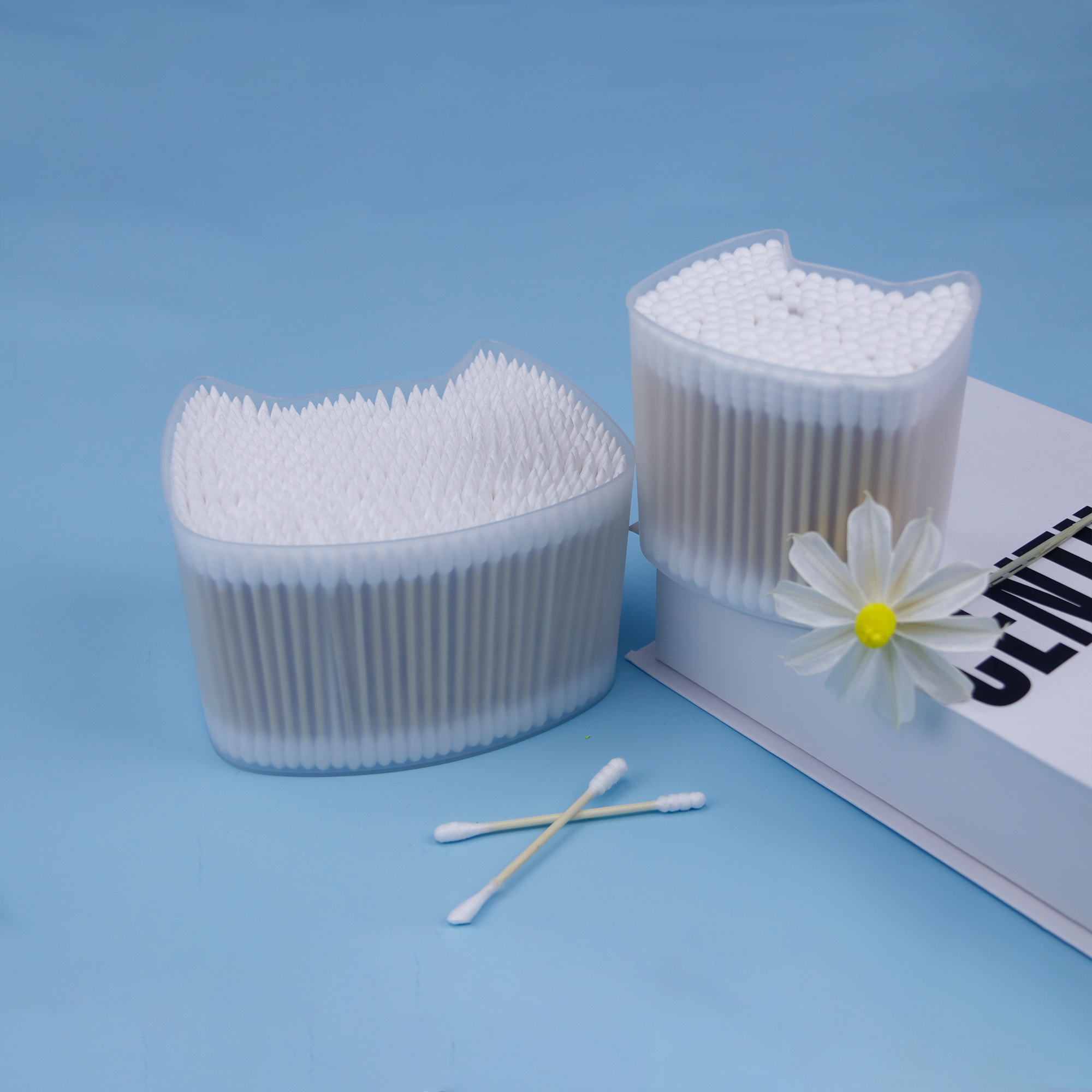
For paper stick beauty cotton swabs, the key quality indicators include wall thickness, core density, and surface smoothness. A premium paper stick should not develop a rough or splintered texture that could scratch the skin. It should also maintain its straightness throughout the product's shelf life, as warped or curved sticks indicate poor material quality or inadequate storage conditions during manufacturing.
Plastic stick variants used in premium beauty cotton swabs are typically made from polypropylene, which offers consistent rigidity and a smooth surface finish. The plastic should be food-grade or cosmetic-grade quality, free from plasticizers such as BPA or phthalates. For brands targeting eco-conscious markets, biodegradable or compostable stick materials are increasingly being adopted as a premium differentiator, provided they meet the same structural performance standards.
Bond Strength Between Tip and Stick
One of the most critical structural standards for beauty cotton swabs is the bond strength between the cotton tip and the stick. A tip that detaches during use is not only a functional failure but also a safety concern, particularly when the swab is used near the eyes or ears. Premium quality standards require that the tip withstand a defined pull-force without separating from the stick.
This bond is achieved through a combination of mechanical winding tension and, in some cases, a food-safe adhesive. Premium manufacturers test bond strength as part of their outgoing quality control process, applying standardized pull tests to samples from each production batch. The acceptable threshold for tip retention force is typically specified in the product's quality standard documentation.
Visual inspection standards also apply here. The junction between the tip and the stick on premium beauty cotton swabs should be clean and uniform, with no visible gaps, fraying, or uneven cotton distribution at the base of the tip. These visual indicators are reliable proxies for the underlying bond quality and are routinely checked during production line audits.
Hygiene, Packaging, and Regulatory Compliance Standards
Clean Room Manufacturing and Microbial Control
Premium beauty cotton swabs intended for use on the face and near sensitive areas must be manufactured under controlled hygiene conditions. This means production environments with defined cleanliness levels, regular microbial monitoring, and strict personnel hygiene protocols. While not all beauty swabs require sterile manufacturing, premium products are produced in environments that minimize the risk of microbial contamination.
Finished product testing for total aerobic microbial count, yeast, and mold is a standard quality requirement for premium beauty cotton swabs sold in regulated markets. These limits are typically aligned with cosmetic product safety guidelines, such as those outlined by the ISO 17516 standard for cosmetic microbiology. Products that exceed these limits pose a genuine risk to consumer health and should not be considered premium quality regardless of their other attributes.
Packaging integrity is directly linked to hygiene maintenance. Premium beauty cotton swabs are packaged in sealed containers — typically resealable boxes or sealed polybag formats — that protect the product from environmental contamination between uses. The packaging material itself must be free from inks or coatings that could migrate into the cotton, and the seal integrity should be tested to confirm it holds under normal handling and shipping conditions.
Regulatory Certifications and Market Compliance
Regulatory compliance is a non-negotiable standard for premium beauty cotton swabs sold in professional or retail channels. In the European Union, cotton swabs used for cosmetic purposes must comply with the EU Cosmetics Regulation, which requires safety assessment documentation and responsible person registration. In the United States, products sold for personal care use must meet FDA guidelines for cosmetic products, including labeling requirements and ingredient safety standards.
OEKO-TEX Standard 100 certification is widely recognized as a benchmark for textile safety in personal care products, and premium beauty cotton swabs from reputable manufacturers typically carry this certification. It confirms that every component of the product — fiber, stick, and any processing chemicals — has been tested against a comprehensive list of harmful substances and found to be within safe limits.
ISO 9001 quality management system certification is another indicator of premium manufacturing standards. It does not certify the product itself but confirms that the manufacturer operates a documented, audited quality management system capable of consistently producing beauty cotton swabs that meet defined specifications. For B2B buyers, this certification reduces sourcing risk and supports supplier qualification processes.
FAQ
What makes beauty cotton swabs different from standard cotton swabs?
Beauty cotton swabs are specifically designed for cosmetic and skincare applications, which means they are held to higher standards for tip softness, fiber purity, dimensional consistency, and chemical safety. Standard cotton swabs may use lower-grade cotton, less precise tip construction, or materials that are not optimized for use near the eyes, lips, or sensitive facial skin. Premium beauty cotton swabs are also more likely to carry certifications such as OEKO-TEX Standard 100 that verify their safety for skin contact use.
How can I verify the cotton purity in beauty cotton swabs before purchasing?
The most reliable way to verify cotton purity is to request third-party laboratory test reports from the supplier. These reports should confirm the fiber composition, the absence of synthetic blends, and compliance with chemical safety limits for residual bleaching agents and fluorescent brighteners. Certifications such as OEKO-TEX Standard 100 also provide independent verification of fiber safety and can be confirmed directly through the certifying body's public database.
Are there specific certifications I should look for when sourcing premium beauty cotton swabs?
Yes. The most relevant certifications for premium beauty cotton swabs include OEKO-TEX Standard 100 for textile and fiber safety, ISO 9001 for manufacturing quality management, and compliance documentation aligned with the EU Cosmetics Regulation or FDA cosmetic guidelines depending on your target market. For products positioned in the natural or organic beauty segment, additional certifications related to organic cotton sourcing may also be relevant.
What is the acceptable microbial limit for beauty cotton swabs used in cosmetic applications?
For beauty cotton swabs used in cosmetic applications, the total aerobic microbial count should generally not exceed 1,000 CFU per gram, with no detectable pathogens such as Staphylococcus aureus or Pseudomonas aeruginosa. These limits are consistent with ISO 17516 guidelines for cosmetic microbiology. Yeast and mold counts are typically held to a limit of 100 CFU per gram. Premium manufacturers test finished products against these benchmarks and provide certificates of analysis upon request.

